About SharingwithWriters Blog


Named to "Writer's Digest 101 Best Websites," this #SharingwithWriters blog is a way to connect with my readers and fellow writers, a way to give the teaching genes that populate my DNA free rein. Please join the conversation using the very tiny "comment" link. For those interested in editing and grammar, go to http://thefrugaleditor.blogspot.com.
Showing posts with label midwest book review. Show all posts

Saturday, September 05, 2020

Jim Cox of Midwest Book Review Shares Libraries Seldom-Used Resources

 Jim Cox of Midwest Book Review and I have been pen pals ever since we met at a writer's conference--was it some ten years ago? We kept in touch primarily because he puts out an amazing newsletter that is always pertinent to the writing life--sharing his wealth of accumulated publishing knowledge and reviews of books that are of interest in the publishing world. Of course, I couldn't resist telling him he is appreciated. That's a great way to make email pals these days.

Jim also gives me permission to reprint some of his letters and reviews. I tend to choose the ones about rarely covered topics in the blogosphere (and there are lots of them!). Today's is about some of the intricacies of  libraries' little-understood back alleys to provide resources for authors and a little about what Jim does to coordinate information he has that will be useful to them (and you!)  using the Publishers Bookshelf and Writers Bookshelf at #MidwestBookReview.  Keep reading:

Dear Publisher Folk, Friends & Family:

Back in the late 70s I lived in Monroe, Wisconsin, a small town in the south of the Badger state that had a modest but very nice public library. At that time I was also very highly engaged in reading everything by Robert E. Howard (the creator of the Conan books and the man who basically launched the fantasy subgenera known as Sword & Sorcery) that I could get my hands on. It seems that Howard had published a small book of his poetry called "Songs from an Iron Harp") back in the 1930s. The original print run was something like 300 copies and the book was exceedingly rare.

When I asked the Monroe librarian how I might be able to get my hands on a copy she introduced me to something called the Interlibrary Loan System. She put in a request for that rare book for me and about a month later the search turned up a copy in the collection of Brown University in Providence, Rhode Island. Those good folk wouldn't send me the book itself, but made a photocopy of the entire book, cover and all, and sent me that telling me that I could keep it. I still have that photo copy to this very day.

The Interlibrary Loan Service (sometimes called interloan, interlending, document delivery, document supply, or interlibrary service) is a service whereby a patron of one library can borrow books, DVDs, music, etc. and/or receive photocopies of documents that are owned by another library. The user makes a request with their home library; which, acting as an intermediary, identifies libraries with the desired item, places the request, receives the item, makes it available to the user, as well as arranges for its return. The lending library usually sets a due date and overdue fees of the material borrowed. Although books and journal articles are the most frequently requested items, some libraries will lend audio recordings, video recordings, maps, sheet music, and microforms of all kinds. In some cases, nominal fees accompany the interlibrary loan services. (Wikipedia)

Public and academic libraries have established voluntary associations, often on a regional basis, to provide an online union catalog of all the items held by all member libraries. Whenever a library adds a new title to its catalog, a copy of the record is also added to the union list. This allows librarians to quickly determine which of the other libraries hold an item. Software then facilitates the request and supply tasks. In the U.S., Online Computer Library Center (OCLC) is used by public and academic libraries. Formerly, another network RLIN (Research Libraries Information Network) was used primarily by academic libraries but merged with OCLC on October 1, 2007. (Wikipedia)

Online requests are usually submitted via OCLC's WorldCat or FirstSearch in the United States. Libraries without access to either can participate in interlibrary loan by submitting requests by postal mail, fax, email, or telephone call. These are referred to as manual requests. Manual requests can be submitted in the United States through the American Library Association. Individual libraries can agree to reciprocal arrangements between each other. (Wikipedia)

For those who might be curious, here is a link showing what an ALA Interlibrary Loan Service request form looks like:

I have archived on the Midwest Book Review website every review that I have ever done on 'how to' books for authors and publishers -- covering every aspect of the publishing process from writing an manuscript to marketing the published book. You will find them at:

Almost all of them (and there are hundreds of titles) can be obtained, for free, by aspiring writers, publishers, publicists, and non-specialist general readers with an interest in writing and publishing from their local community library through that same InterLibrary Loan Service that I was introduced to so long ago and have used for other titles from time to time ever since.

MORE ABOUT TODAY'S #SHARINGWITHWRITERS GUEST

Jim Cox is editor-in-chief of Midwest Book Review archives all of the previous issues of his "Jim Cox Report" the Midwest Book Review website at www.midwestbookreview.com/bookbiz/jimcox.htm. If you'd like to receive the "Jim Cox Report" directly (and for free), just send him an email asking to be signed up for it at http://www.midwestbookreview.com. And watch for reprints of some his favorite author-and-publishing related reviews here and on my #TheNewBookReview, https://TheNewBookReview.blogspot.com

MORE ABOUT THE BLOGGER 

 Howard-Johnson is the multi award-wining author of fiction, creative nonfiction, and poetry. She is also a marketing consultant, editor, and author of the multi award-winning HowToDoItFrugally Series of books for writers including the multi award-winning The Frugal Book Promoter (http://bit.ly/FrugalBookPromoIII), now offered by Modern History Press in its third edition. Carolyn's latest is in the #HowToDoItFrugally Series of books for writers is How to Get Great Book Reviews Frugally and Ethically. Learn more on her Amazon profile page (http://bit.ly/CarolynsAmznProfile). Great Little Last Minute Editing Tips for Writers (http://bit.ly/Last-MinuteEditsII) is one of her booklets--perfect for inexpensive gift giving--and, another booklet, The Great First Impression Book Proposal (http://bit.ly/BookProposalsII) helps writers who want to be traditionally published. The Frugal Editor (http://bit.ly/FrugalEditor), now in its second edition, is the winningest book in the series. Carolyn also has three frugal books for retailers including one she encourages authors to read because it will help them convince retailers to host their workshops, presentations, and signings. It is A Retailer’s Guide to Frugal In-Store Promotions: How To Increase Profits and Spit in the Eyes of Economic Downturns with Thrifty Events and Sales Techniques (http://bit.ly/RetailersGuide). In addition to this blog, Carolyn helps writers extend the exposure of their favorite reviews at TheNewBookReview.blogspot.com. She also blogs at all things editing--grammar, formatting and more--at The Frugal, Smart, and Tuned-In Editor (http://TheFrugalEditor.blogspot.com)

Wednesday, September 19, 2018

Celebrating 43 Years with a Treasured Quotation and a Self-Google Reminder!

I especially love Jim Cox's newsletter because "business" often turns into a lovely literary essay or a neat how-to article or just a reminder. This one (printed with his permission) is a bit of all three.  Thank you, Jim for being around and happy 43rd Anniversary for helping writers get reviews and sell more books!


Dear Publisher Folk, Friends and Family:

Every now and then I come across a genuinely inspiring and quotable quote. Like this one that is a part of the descriptive introduction for Karen Swallow Prior's "On Reading Well: Finding the Good Life through Great Books" as part of that book's Amazon.com entry:

"Reading great literature well has the power to cultivate virtue. Great literature increases knowledge of and desire for the good life by showing readers what virtue looks like and where vice leads. It is not just what one reads but how one reads that cultivates virtue. Reading good literature well requires one to practice numerous virtues, such as patience, diligence, and prudence. And learning to judge wisely a character in a book, in turn, forms the reader's own character."

I couldn't say it better and just wanted to share it with you.

This month (September 2018) marks the 43rd year of the Midwest Book Review, and me as it's editor-in-chief. At the ripe old age of 75 -- (76 come this November 6th) -- that means that I've been the editor-in-chief of the Midwest Book Review for more than half my life!

To celebrate this 43 year milestone (and just for fun) I went and looked us up on the internet with some Google searches. I really don't know what it means, if anything, but here is what I found:

1. Just typing the Midwest Book Review into the Google search box came up with so many entries that I got tired of clicking on all them after about 15 minutes or so. I was amazed at how many web sites that I had never heard of referenced the Midwest Book Review in terms of specific reviews from us or the services we provided, or the interviews I have given over the years.

2. I then typed in James A. Cox but ran into a lot of James A. Cox's out there. Then I tried James A. Cox + Midwest Book Review and got pages and pages of entries. And my ego being what it is, spent all too much time browsing through them -- blew another hour or so!

3. Then it occurred to me to enter Jim Cox + Midwest Book Review and while a lot of earlier entries turned up there were a fair number of new ones including one for a magazine interview I did for the Pennsylvania Literary Journal: Volume 9 (Spring 2017) which is apparently still for sale at:


and notes that "This issue includes an interview with Jim Cox, who has been editing the "Midwest Book Review" for over four decades, publishing thousands, if not hundreds of thousands of book reviews, with a focus on books from small presses that typically struggle with finding interested reviewers. Jim opens up about the realities of making a living from operating a review publication. His insight is essential to any author interested in self-promotion, and who is interested in how the review process looks from the other perspective. "

I also found still another long forgotten interview that I did with Marya Calvani for Blogcritic back in June 2008. You can find it at:


It's nice to be well thought of pretty much throughout the publishing industry down through all these many years.

But my own ego aside, the little exercise I went through this morning is something I would recommended all authors and publishers do in their own behalf at least once a year. For one thing, you could come across references to your work or reviews of your books that you might otherwise never know of.

Incidentally, I just plugged Midwest Book Review into the Amazon.com search box and it came up with 427 results. Not too shabby!"


MORE ABOUT JIM COX, TODAY'S GUEST AND INVETERATE REVIEWER

Those who would like to partake of Jim's wisdom and frequent review of books written specifically to help writers may subscribe to his newsletter at the MidwestBookReview.com website.  His daughter, Beth, also writes one with a focus on tech that will help writers.  You may reach him at at mwbookrevw@aol.com. Be sure to browse the site for great reviews and whole lists of resources useful for authors.


MORE ABOUT THE BLOGGER


Howard-Johnson is the author of fiction, creative nonfiction, and poetry. She is also a marketing consultant, editor, and author of the multi award-winning HowToDoItFrugally Series of books for writers including the award-winning second editions of The Frugal Book Promoter (where she talks more about choosing and the advantages of winning contests and how to use those honors)  and The Frugal Editor. Her latest is in the series is  How to Get Great Book Reviews Frugally and Ethically. Learn more on her Amazon profile page, http://bit.ly/CarolynsAmznProfileGreat Little Last Minute Editing Tips for Writers is one of her booklets--perfect for inexpensive gift giving--and, another booklet, The Great First Impression Book Proposal helps writers who want to be traditionally published. She has three FRUGAL books for retailers including one she encourages authors to read because it will help them convince retailers to host their workshops, presentations, and signings. It is A Retailer’s Guide to Frugal In-Store Promotions: How To Increase Profits and Spit in the Eyes of Economic Downturns with Thrifty Events and Sales Techniques. In addition to this blog, she helps writers extend the exposure of their favorite reviews at TheNewBookReview.blogspot.com. She also blogs at all things editing--grammar, formatting and more--at The Frugal, Smart, and Tuned-In Editor (http://TheFrugalEditor.blogspot.com )


Celebrating 43 Years with a Treasured Quotation and a Self-Google Reminder

Thursday, August 10, 2017

Must-Have Review Resource for Writers/Publishers

Do you know about Jim Cox's Midwest Book Review.  It's a lot more than a respected review site that considers all books based on their content and value,  not on the press they are printed on.  But it's a lot more than that. Reviews chosen for publishing may get included on any of a number of special editions aimed at librarians and specific regions.  This one by Diane Donovan, editor of The California Bookwatch, appeared on her "Writing/Publishing Shelf."  Reviewers and editors always give permission to expand the exposure of the reviews they write so that means when yours is chosen, you can submit it according to the guidelines in the left column to the sister of this blog, The New Book Review.   Be sure to subscribe while you're there. High participation benefits all the writers, publishers, and reviewers who contribute to it.

The Writing/Publishing Shelf

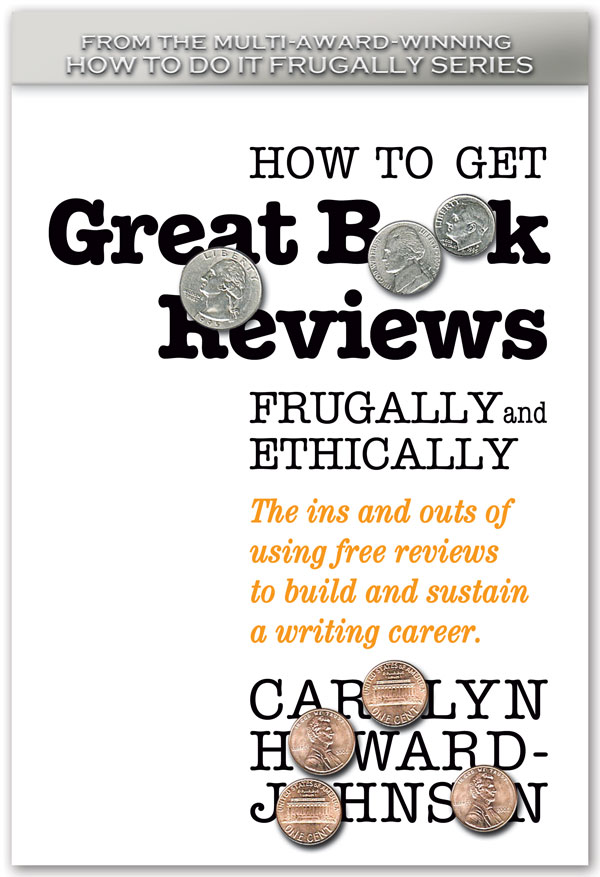
How to Get Great Book Reviews Frugally and Ethically
Subtitle: The ins and outs of using free reviews to build and sustain a writing career
Series: Third in the multi award-winning #HowToDoItFrugally Series of books for writers
Author: Carolyn Howard-Johnson
Website:  www.howtodoitfrugally.com
ISBN: 9781536948370, 

$17.95 PB, $9.95 Kindle
Available on Amazonhttp://bit.ly/GreatBkReviews

Reviewed by Diane Donovan, Editor of California Bookwatch, originally for her Writing/Publishing Shelf

How to Get Great Book Reviews Frugally and Ethically should be on the reading lists of anyone interested in gaining and, even more important, using book reviews. It informs both self- and traditionally-published authors of the ins and outs of getting and utilizing reviews; but most importantly, it discusses some of the tips and tricks for doing so - and reveals many approaches to avoid. From making the most of the best review from the most authoritative source to knowing what to do if the review process goes awry, this outlines the entire process of media promotion in the course of explaining the difference between a good and bad review, how they can be effectively utilized, and what to avoid. Very highly recommended!


Saturday, October 01, 2016

Getting Great Book Reviews and Making Them Work Harder for You

Just thinking you'd like a peek at my brand new release on getting reviews. If you would like an excerpt or related article for your blog, just ask! (-:  
Happy writing and promoting,
Carolyn


Off-The-Wall -Alternatives

Making Your Reviews Into Workhorses

By Carolyn Howard-Johnson.

Excerpted (and adapted) from Carolyn’s new How To Get Great Book Reviews Frugally and Ethically: The ins and outs of using free reviews to build and sustain a writing career to be released this fall.

Authors rarely get the most of their reviews. Surprised? I think it’s either that they are so excited about the review or that the idea of extending a review’s value doesn’t occur to them. Or it’s because so many reviews these days come from readers. They aren’t professionals, so they have no idea how to distribute content beyond posting their review on Amazon.
One of the ways they can get more mileage from their reviews is to get them reprinted in more venues than the reviewer ever planned. Or you do it for them. And, no, it isn’t stealing or plagiarism if you get permission from the reviewer first. In fact, it can benefit the reviewer. 
When you get further distribute reviews you already have, it’s like getting a little marketing bonus. Here’s how to do that:
  • If your reviewer doesn’t normally write reviews (these reviewers are often called reader reviewers), suggest she send her review or the link to her review to her friends as a recommendation.
  • If your reviewer lives in a town with a small daily or weekly newspaper, she could send her review to them. She may realize the thrill of being published the first time. 
  • Ask your reviewer—even one who writes for a review journal—to post her review on Amazon.com, BN.com, and other online booksellers that have reader-review features. I have never had a reviewer decline my suggestion. It is ethical for a reviewer to do it or give you permission to reuse the review as long as she holds the copyright for the review. (Most reviewers do not sign copyright-limiting agreements with the medium who hires them.) Get more information on Amazon’s often misrepresented review policies in Chapter Eleven, “Managing Your Amazon Reviews.”
  • After you have permission from the reviewer to reprint the review, post it on your blog, on your Web site, and in your newsletter. Use quotations from the reviews to give credibility to selected media releases and queries.
  • Once you have permission to use reviews, send copies of good ones to bookstore buyers and event directors as part of your campaign to do book signings, to speak, or do workshops in their stores. Go to (midwestbookreview.com/links/bookstor.htm) for a starter list of bookstores.
  • Send quotations (blurbs) from the reviews you get to librarians, especially the ones in your home town or cities you plan to visit during book tours. Include order information. Try Midwest for a list of libraries (midwestbookreview.com/links/library.htm). 
  • Use snippets from positive reviews as blurbs in everything from your stationery to your blog. (Use your e-reader’s find function to search for other ideas for using your blurbs in this book.)
  • If your reviewer doesn’t respond to your request to post the review on Amazon, excerpt blurbs from them and post them on your Amazon buy page using Amazon’s Author Connect or Author Central features. They will appear on your Amazon sales page. 
  • Include the crème de la crème of your reviews on the Praise Page of your media kit and inside the front cover of the next edition (perhaps a mass market edition like the pocket paperbacks sold in grocery stores?). See my multi award-winning The Frugal Book Promoter (bit.ly/FrugalBookPromo) for the complete—and I do mean complete—lowdown on media kits. 
Hint: Occasionally authors get reviews on Amazon that, shall we say…don’t thrill them. Reviews like that can be minimized by asking others for reviews. As new reviews are added, the old ones tend to get buried in the lineup of reviews. We can also (pleasantly!) refute a position a reviewer takes using the comment feature—or thank them for bringing something to our attention. We can also dispute their validity with Amazon, though that rarely works.
You can use some of these suggestions as part of your keeping-in-communication-with-reviewers effort after her review has been published.
Coming up in the newest release in my multi award-winning HowToDoItFrugally series of books, How To Get Great Book Reviews Frugally and Ethically: The ins and outs of using free reviews to build and sustain a writing career to be released this fall is more on how Amazon can helps authors early in their review-getting process. I mean, as long as it’s nearly impossible to do without Amazon and still have a successful book campaign, we might was well get them to return the loyalty we show them in as many ways as possible. 
----
Carolyn Howard-Johnson brings her experience as a publicist, journalist, marketer, and retailer to the advice she gives in her HowToDoItFrugally series of books for writers and the many classes she taught for nearly a decade as instructor for UCLA Extension’s world-renown Writers’ Program. The books in her HowToDoItFrugally Series of books for writers have won multiple awards. That series includes both the first and second editions of The Frugal Book Promoter and The Frugal Editor won awards from USA Book News, Readers’ Views Literary Award, the marketing award from Next Generation Indie Books and others including the coveted Irwin award. Her next book in the HowToDoItFrugally series for writers will be How To Get Great Book Reviews Frugally and Ethically.


The author loves to travel. She has visited eighty-nine countries and has studied writing at Cambridge University in the United Kingdom; Herzen University in St. Petersburg, Russia; and Charles University, Prague. She admits to carrying a pen and journal wherever she goes. Her Web site is www.howtodoitfrugally.com

Tuesday, December 01, 2015

Amazon Again: The Ins and Outs of Going After Fake Reviews


Amazon Attacks Fake Reviews and Reviewers
~~~~~~~~~~~~~~~~~~~~~~~~~~~~~~~~~
According to the LA Times, Amazon is suing more than 1,000 writers for selling recommendations (and reviews!) for books (and other items) they didn’t buy.

If you have read The Frugal Book Promoter, you know that I recommend writing reviews of other authors’ books as a way to network and as a way to give back to the industry that makes books possible. In fact, a free and unbiased review is the nicest thing you can give to an author as a token of appreciation. And one of the best places you can post your review is on Amazon where it has the best chance of being read by thousands of readers. There are, of course, other places to post them including your own blog, Goodreads, and other sites. You can also volunteer to review for sites like BookPleasures, MyShelf and Midwest Book Review that depend on those who love to read to keep their sites going even when profit margins are slim.

It is reported that Amazon sees reviews that are too glowing as a danger sign. That’s fair. Professional reviews can be rave reviews, but no book is perfect. In fact, a review is more trustworthy (and therefore sells more books--proved by studies over the years!) if it does point out places where the book is weak. Such critiques needn’t be snarky. They can be tactful, firm, and helpful to readers and authors alike.

Perhaps it was the offers on Fiverr.com that finally ticked Amazon off enough to do this. Many offered reviews for $5. And some of those promised five-star reviews. And, yes, this is—to put it mildly—unethical. You’ve probably seen me discourage authors and publishers from paying for reviews in the past because they aren’t credible even if they are honest.  People like bookstore owners, librarians, and other publishing industry professionals generally know they have been paid for even if they come from Publishers Weekly or Kirkus. In fact, those magazines put their paid-for reviews in a separate place or mark them differently so their readers will know! Reviews that aren’t credible are a waste of money and time. And, did I mention unethical? Ahem!

Some of these reviews offer to post reviews using multiple accounts and IP addresses. I say, go after them Amazon!  This kind of thing ruins the process for everyone. 

Nevertheless, I’ve seen Amazon pull reviews based on flimsy excuses in the past and so I worry.
The trouble with pulling reviews too aggressively is how they make the decision to do so. They use logarithms that tell them if a reviewer purchased the book. That seems like a good idea at first, but their site is not the only one that sells an item so if their logarithms are picking up reviews of items not purchased from them, they may be wrong, terribly wrong.

Here is why:

  •   It is a publishing tradition that publishers and writers provide books at no cost--often special review copies (ARCs)  or galleys-- to those who write reviews of their book (s). These books would not show up as sales anywhere.
  • Many who write reviews of a book or product may have received the book as a gift for their birthday or a holiday. 
  • Many write reviews of books or products that they buy at a bookstore or any other retail outlet.
  • Some may write reviews of books they borrow from the library or buy from secondhand bookstores. 
So are the bulleted review tracks above indications they are fake reviews? I don’t know how Amazon is selecting those people it will sue, (and I know they have plenty of money to waste if their selection is off base and they lose!), but I think they are once again on very shaky ground.

In the meantime, if you review for Amazon (and you should), be liberal with disclaimers like this:

“Disclaimer: This reviewer received a book in exchange for an unbiased and fair review. No fee was charged either the author or the publisher.”

And do avoid touting your own book in the review. The link used in the review (the one that Amazon provides) takes readers back to your profile page. That, dear author/reviewer should be enough for you. Offering this to authors and reviewers is indeed a gift from Amazon and we should not abuse the hand that feeds us.

Note: For more on this topic see the LA Times’ Technology page in their business section, Thursday, October 2, 2015.
.N
No                                                  

----
Carolyn Howard-Johnson is the author of the multi award-winning HowToDoItFrugally books for writers as well as a novelist and poet. She is working on the third major book in the HowToDoItFrugally series of books called Getting Great Reviews Frugally and Ethically and she just published a book of poetry perfect for this silly political season. It is Imperfect Echoes, http://bit.ly/ImperfectEchoes . Her Web site is http://howtodoitfrugally.com 


----
 Carolyn Howard-Johnson, author of This Is the Place; Harkening: A Collection of Stories Remembered; Tracings, a chapbook of poetry; and how to books for writers including the award-winning second edition of, The Frugal Book Promoter: How to get nearly free publicity on your own or by partnering with your publisher; The multi award-winning second edition of The Frugal Editor; and Great Little Last Minute Editing Tips for Writers . The Great First Impression Book Proposal is her newest booklet for writers. She has three FRUGAL books for retailers including A Retailer’s Guide to Frugal In-Store Promotions: How To Increase Profits and Spit in the Eyes of Economic Downturns with Thrifty Events and Sales Techniques. Some of her other blogs are TheNewBookReview.blogspot.com, a blog where authors can recycle their favorite reviews. She also blogs at all things editing, grammar, formatting and more at The Frugal, Smart and Tuned-In Editor .

Sunday, July 12, 2015

Valuable Reference for Writers from Midwest Book Review


I am honored that The Midwest Book Review added a link to this blog on their page of links for blog of value to writers:  I hope this quick little post gives you a resource that can make a difference in your writing career! 

While you are there, be sure to explore the extensive reading and review opportunities on the site.
Special thanks to B. Cox, Managing Editor, The Midwest Book Review
-----
 Carolyn Howard-Johnson, author of This Is the Place; Harkening: A Collection of Stories Remembered; Tracings, a chapbook of poetry; and how to books for writers including the award-winning second edition of, The Frugal Book Promoter: How to get nearly free publicity on your own or by partnering with your publisher; The multi award-winning second edition of The Frugal Editor; and Great Little Last Minute Editing Tips for Writers . The Great First Impression Book Proposal is her newest booklet for writers. She has three FRUGAL books for retailers including A Retailer’s Guide to Frugal In-Store Promotions: How To Increase Profits and Spit in the Eyes of Economic Downturns with Thrifty Events and Sales Techniques. Some of her other blogs are TheNewBookReview.blogspot.com, a blog where authors can recycle their favorite reviews. She also blogs at all things editing, grammar, formatting and more at The Frugal, Smart and Tuned-In Editor .

Friday, July 10, 2015

Passing It Forward: A Review Journal That Doesn't Discriminate

This is a bit of a brag, but it is also a mini lesson in going with the flow (basically not driving yourself crazy over all the marketing you know you should do but can't or all the writing opportunities that come to you that may or may not ever come to fruition).  And it's also an exercise in passing it forward.

Midwest Book Review has been around a long time and during that time it has supported indie authors and traditionally published authors alike. It has provided resources that can make a difference for writers free.  It just seemed to me that a a simple thank you for what they have done for me and others isn't enough to make those of you unfamiliar with what they do grasp the opportunities they offer.

So here's the story:

 The second edition of my multi award-winning The Frugal Editor is now available in paperback and because of my husband’s illness I have not been able to plan or execute a marketing campaign for it.  And because it is independently published, I have no one else to do it. And because of my caretaking duties, I have no time to hire someone who will.
 
Still, hit or miss, I consider its launch a success not in sales necessarily (people have to hear about a book--maybe hear about it seven times!-- to buy it) but in the support given it by the likes of James A. Cox, Editor-in-Chief of Midwest Book Reviews who featured it in his online magazine Library Bookwatch, in his e-mail newsletter The Cox Report, and in the Writing/Publishing shelf of the Midwest Book Review itself. Two of his comments:


“. . .an absolute ‘must have’ for virtually all aspiring and practicing authors in these tough economic times.”


“Tips, tricks, techniques and do-it-yourself editing secrets will aid in improving one’s writing at every state of the process. . .”


And his managing editor Bethany Cox called it “exceptionally worthy” and included her own review in her newsletter. She also said it is a “complete course of instruction under one cover.  From editing, query letters to final manuscript.”

It is an honor to earn the respect of an institution and the people behind it who have for many years conducted a public service for authors and publishers by providing free reviews and always eschewing judging a book’s qualifications by its publisher or the kind of press it is printed on.
 
I am adding some tips that will help you in the review process excerpted from my book The Frugal Book Promoter in the July issue of my SharingwithWriters newsletter and some links to other resources provided by Independent Book Publishers Assn. If you don't subscribe to that letter, e-mail me at HoJoNews@AOL.com  and I'll send you a copy. Between generous and unbiased organizations like Midwest and others (organizations that don't judge a book by the press a book is printed on) and the information they regularly provide, you too will soon be in a position to pass it forward.


-----
Carolyn Howard-Johnson, author of This Is the Place; Harkening: A Collection of Stories Remembered; Tracings, a chapbook of poetry; and how to books for writers including the award-winning second edition of, The Frugal Book Promoter: How to get nearly free publicity on your own or by partnering with your publisher; The multi award-winning second edition of The Frugal Editor; and Great Little Last Minute Editing Tips for Writers . The Great First Impression Book Proposal is her newest booklet for writers. She has three FRUGAL books for retailers including A Retailer’s Guide to Frugal In-Store Promotions: How To Increase Profits and Spit in the Eyes of Economic Downturns with Thrifty Events and Sales Techniques. Some of her other blogs are TheNewBookReview.blogspot.com, a blog where authors can recycle their favorite reviews. She also blogs at all things editing, grammar, formatting and more at The Frugal, Smart and Tuned-In Editor .

Thursday, November 10, 2011

Book Promotion: A Book for Writers with "Enduring Value"

The Frugal Book Promoter, second edition
Carolyn Howard-Johnson
HowToDoItFrugally Publishing
Author's Web site: www.carolynhoward-johnson.com
ISBN: 9781463743291,
$17.95
 

Reviewed by Jim Cox, Editor of The Midwest Book Review
Originally for the Midwest Book Review and newsletter


Carolyn Howard-Johnson draws upon her many years of experience and expertise as a professional book publicist and marketing specialist to author "The Frugal Book Promoter". The 416-page compendium of commentary, advice, tips, tricks and 'real world' techniques on how to authors can obtain nearly free publicity on your own or by partnering with their publishers will prove to be an invaluable, practical, profitable, and thoroughly 'user friendly' instructional reference.
 
 It should be noted that the Midwest Book Review is cited four times. Of special note in this newly expanded and completely updated second edition are the sample letters query letters, media releases, blog entries, trade show invitations, phone pitch scripts, email auto-signatures, and tip sheets.
 
Simply stated, The Frugal Book Promoter is the single most valuable addition any aspiring author or novice small press publishers can add to their personal and professional book marketing reference shelves -- and has a great deal of enduring value for even the more experienced publisher marketing directors and publicists.
 
-----
Carolyn Howard-Johnson, author of This Is the Place; Harkening: A Collection of Stories Remembered; Tracings, a chapbook of poetry; and how to books for writers including, The Frugal Book Promoter: How To Do What Your Publisher Won't; The Frugal Editor: Put Your Best Book Forward to Avoid Humiliation and Ensure Success; and Great Little Last Minute Editing Tips for Writers . The Great First Impression Book Proposal is her newest booklet for writers. She has three FRUGAL books for retailers including A Retailer’s Guide to Frugal In-Store Promotions: How To Increase Profits and Spit in the Eyes of Economic Downturns with Thrifty Events and Sales Techniques. Some of her other blogs are TheNewBookReview.blogspot.com, a blog where authors can recycle their favorite reviews. She also blogs at all things editing, grammar, formatting and more at The Frugal, Smart and Tuned-In Editor . If your followers at Twitter would benefit from this blog post, please use the little Green widget to let them know about this blog:

Monday, March 29, 2010

Conversation with Jim Cox: On Book Review Ethics

INTRODUCTION:


Below you will find a string of e-mails reprinted, in part, from "The Jim Cox Report."  The first is copied directly from Cox’s newsletter and it includes the copy of an e-mail sent to him and a response from Jim to that e-mail. Then you will see that Jim and I started a conversation on the all-important subject of book reviews. Jim gave me permission to reprint the thread and am doing so because I feel there is so much misunderstanding going around about reviews, even among seasoned writers. And, of course, I reprinting because Jim is not only an expert on the subject, but is also one of the few reputable review journals/sites that is fully open to review books regardless of how they are published. I hope you will take the time to follow the thread, maybe even print it out to read at your leisure. It wouldn’t be in this letter if I didn’t think was worth your time.


FROM THE JIM COX REPORT
Publisher Folk, Friends & Family:


When you are in the business of working with people--and most especially self-published authors--it is inevitable that from time to time you have to engage with disappointment, disaffection, disillusion, and even outrage. The key to success in such dealings is to remain calm, compassionate, realistic, and informational.
I received a letter of complaint, accusation, demand, and threat from a Mr. Ken Jarman, a self-published author (Barefoot Through The Goathead Patch) whose review copy submissions to the Midwest Book Review did not result in a review.
Professional book reviewers and book review publications all too often turn down self-published authors from consideration simply because every now and then they have to deal with the naiveté, emotional involvement, ignorance, unrealistic expectations from a few self-published authors ultimately resulting in threats and hard feelings against the reviewer, and/or the editorial staff of the book review organization.
I'm going to share my response to just such a contact with just such a self-published author. The reason why I put up with belligerent authors is that they are few and far between, plus I've always seen as part of my responsibility as the editor-in-chief of the Midwest Book Review to be that of an educator. So I want to share with other self-published authors information that will prove useful to them should they ever find themselves in Mr. Jarman's position.
Indeed, once the aggrieved self-published author learns the rules of the road with respect to book review guidelines and standards, often their tempers cool and they become more discriminating in their book review submission decisions. In other words, they become more professional and less emotional.
Here's my e-mail to that author:

Dear Mr. Jarman:

Your certified letter of November 9th has been received.

Your books arrived safely and passed my initial screening. Unfortunately they ultimately failed to achieve a review assignment. This is no reflection on the quality of your work because it made a quite favorable impression on me. Simply the unfortunate consequence of having only 76 reviewers to cope with the more than 2,300 titles a month arriving here for review consideration.
With respect to your concerns upon finding a review copy title for sale on the Internet there are some basic publishing industry standards that I would like to bring to your attention because as a self-published author your are apparently not aware of them.
All review copies submitted for review become the property of that reviewer and/or review publication to do with as they please, whether or not a review is generated, and whether or not a generated review is positive or negative with respect to the book in question
There are several instructional articles with respect to book reviewing, the book review process, what to do with reviews, and avoiding scam artists posing as reviewers.
I would direct your attention to the following articles and strongly suggest you read them:

1. Rules Regarding Review Copies
http://www.midwestbookreview.com/bookbiz/advice/rules.htm

2. How To Spot A Phony Book Reviewer
http://www.midwestbookreview.com/bookbiz/advice/phony.htm

3. Amazon Book Review Guidelines
http://www.midwestbookreview.com/bookbiz/advice/amazguide.htm

4. Amazon Review Copy Policy
http://www.midwestbookreview.com/bookbiz/advice/arcp.htm

5. A Conversation About Getting Your Book Reviewed
http://www.midwestbookreview.com/bookbiz/advice/conversa.htm

6. Defacing Review Copies
http://www.midwestbookreview.com/bookbiz/advice/deface.htm

7. Getting Reviews For Self Published Books
http://www.midwestbookreview.com/bookbiz/advice/revself.htm

8. How The Book Review System Works
http://www.midwestbookreview.com/bookbiz/advice/system.htm

9. On Book Reviews & Reviewers
http://www.midwestbookreview.com/bookbiz/advice/bookrev.htm

10. On The Use Of Press Releases In Book Reviews
http://www.midwestbookreview.com/bookbiz/advice/pressrel.htm

11. Publication & Book Review Timing
http://www.midwestbookreview.com/bookbiz/advice/revcopy.htm

12. Publicity Released-Based Reviews
http://www.midwestbookreview.com/bookbiz/advice/prbr.htm

13. Regarding Review Copies
http://www.midwestbookreview.com/bookbiz/advice/regardin.htm

14. Reviewers, Accessibility, And Book Stamping
http://www.midwestbookreview.com/bookbiz/advice/stamping.htm


One more general comment I'd like to make and its with regard to the overall tone of your letter. It's quite combative in nature, demanding that you be paid the full cover price for your review copies or dire consequences will result. I quote from your letter:
"Failing your immediate action, I will feel compelled to alert the authors of the two Self-Publishing manuals of my findings and alert the management of Independent Book Publishers Association (IBPA, of which I am a member to warn members of potential unethical actions by some in your company. I will also alert other Publishing/Author organizations of which I am associated with on the Internet, Facebook and Twitter."
This attitude is precisely why most book review operations will not deal with self-published authors.
You might be interested to note that the Midwest Book Review was founded in 1976 and that I personally have become something of an elder statesman with respect to the publishing industry--simply through longevity in the business which includes a well-earned reputation as being an advocate of small-press publishing and self-published authors whenever possible.

One of the ways in which I try to assist aspiring authors and novice publishers (this includes the self-published author) is to write a monthly column for the publishing industry called the "Jim Cox Report". This is a column of advice, commentary, "tips, tricks & techniques", and resources for the small-press community.

You will find my columns archived on the Midwest Book Review web site at:
http://www.midwestbookreview.com/bookbiz/jimcox.htm

Incidentally, all the information on the Midwest Book Review web site (including the "Jim Cox Report") are free of charge.

This e-mail to you in response to your certified letter of November 9, 2010 and will be included in the [next issue of ] "Jim Cox Report" to benefit other self-published authors who may be in need of educating themselves as to the book review process and publishing industry standards with respect to review copy submissions.

Jim Cox
Midwest Book Review

Mr. Jarman then responded to the above email:

Dear Mr. Cox,
It is unfortunate that you believe my letter was primarily frustration or anger over my book not receiving a review. As such, you have missed the point. I thought you would want to know what was happening in your company but I'm astonished that you believe you are operating within normal trade procedures and are indeed defending the process as your right. I believe that while it may be legal, it is unethical for any review copy to appear for sale on Amazon within three weeks of being sent, in direct competition with the publishers own books. I appreciate the articles you sent and they explain a lot. It is obvious that some Reviewers feel it is their right to dispose of the review copies "as they see fit" (some seem to have even institutionalize the process) and must rejoice when they receive copies not marked as such, thereby increasing the value of them. You are right this is a good learning experience for me. I will never send out a Review copy again without "Review Copy" stamped on it.

Sincerely,
Ken Jarman


Another e-mail excerpt from Jim to Mr. Jarman:
Thank you for your response. Publishers have every right to mark their review copies as they deem fit.

I appreciate the civility of your latest email. In return perhaps I can provide one more service to you. On the Midwest Book Review there is a book review data base called "Other Reviewers". You will find it at:

http://www.midwestbookreview.com/links/othr_rev.htm


This is an extensive listing of freelance book reviewers, book review publications, book review web sites, etc. A few (like Forward Magazine) are "pay for play" in that they charge for their reviews, but most are free of charge. Some are specialized (e.g. children's books, poetry, science fiction, etc) while others are more general in nature. (Editor’s

[Note: You will find another list at www.howtodoitfrugally.com/reviewers_and_review_journals.htm]

The trick is to go down the list (and it's a long one), when you see one that sounds promising, click on it and you'll be zapped to their particular Web site. Read through the Web site and you will be able to determine if they are thematically appropriate for your particular book. And if they are--what their submission guidelines are.
I wish you well in your endeavors and will include this latest exchange along with the first one in the next issue of my "Jim Cox Report.” It has a subscription list of about 3,000 and I believe our two exchanges will be to the benefit of a great many folk who are also trying to understand the publishing industry standards and issues that involve the book review process.

Jim Cox
Midwest Book Review


Jim continues in his newsletter:

 
Something to remember is that whenever confrontation occurs it is often quite possible that offended persons may well be having stress in other parts of their lives--and you just happen to be standing in the direct line of fire at the time.


But to balance this particular experience--just in this same past month I also received a letter containing a postage stamp contribution to "support the cause.” What's unique is that the letter containing the postage stamp contribution came from a self-published author who asked in that same letter that the review of their title be removed from Amazon and from the Midwest Book Review web site because it was so badly flawed.

I investigated--and sure enough, a new reviewer for whom this was their first assignment had so badly botched the review that I was compelled to delete it and remove the reviewer from any further considerations for assignments.


The old dictum that you can't please everybody holds true. But you can make disappointing them a teaching moment for themselves and for yourself.

Please remember that reviewers, like authors, come in three basic categories: The Good; The Bad; and The Mediocre. That's why dealing carefully and courteously with reviewers and with authors is always a good idea.

EXCERPT FROM MY NOTE TO JIM:

Oh, my gosh, Jim. Thank you for this issue. I too have had to deal with a couple frustrated authors after I worked hard trying to help market their books. Both times that happened around my now defunct Authors' Coalition and the book fair booths I put together on behalf of authors under its banner.
I took a different path. I did some hard thinking and decided that I'd rather be writing. Because I love to teach and help, I still only my books, my blogs [including this one] and my UCLA classes to authors--most of them newbies--now.
I'm so glad you didn't give up as easily as I. What you do for subsidy- and self-published authors is rare indeed. We need more patient educators, not fewer.
I definitely can see the temptation to charge for e-book reviews (or any kind) and know lots of people who charge and try very hard to maintain ethical standards as they do so. The trouble is, can they? The other issue is how are those reviews then perceived? Even Kirkus has lost some of its professional status with the "paid for" segment it started a couple years ago. And, to take it one step farther. Do we really think bookstore buyers and others put any credence in them? Witness how many have begun to distrust Amazon reviews. And how many have begun to misuse them.


Another thing. Do we really think that review begin to look like paid ads, that there is any point at all? That is what will happen eventually, no matter how careful some reviewers are to be impartial. Then we might as well just say we are selling paid advertising with a twist.
You have an amazing reputation and, unfortunately, the self- and subsidy-published books suffer from a poor one. Your acceptance of books based on quality--not the looks of its cover or the press it is printed on--is very nearly unique in the industry. I'd hate to see it compromised.
Just my two cents, as long as we're having this conversation and you mentioned it. (-: Guess it's the old journalist in me.

BTW, I think training in the field of publicity often helps with difficult situations we find ourselves, too. The question for me, is not whether I can handle it, it's whether I want to. Maybe a few years ago I would have felt it was worth it on the outside chance I could help, I'm beginning to understand that time is even more precious than I always thought it was.

I'm sure you know that the idea that reviewers should not resell their review copies has been going around the Web among writers for at least a decade. So many view it as unethical. Now we have the new tax laws that advise reviewers to include a disclaimer that they received a book "as payment." I find the idea laughable but more than that, I think it is misleading. The word "payment" suggests that the reviewer has been compensated for the review (and sufficiently!), which in turn removes a review from the ideal situation which is that they provide a completely unbiased opinion of the book because they haven't been paid. No wonder people are confused! Some of my old journalism professors would be turning over in their graves if they had lived long enough to see reviewers who consider a book adequate compensation for a review. Many don't mind doing it for the love of doing but this is hardly "pay." Those same professors would be scratching their heads trying to figure just how a reviewer might go about reviewing a book without a copy. Even e-copies have value. So how will reviewers figure the value of an e-copy to claim as income? It is all beyond belief. Journalism ethics dying on one hand and on the other ethics being carried to the edge of ludicrous.


Oh, by the way, I'm reprinting your article, too. You once gave me permission to do it (credited) at any time, and I take you at your word. In fact, I may include this whole discussion if that's OK.

Best,
Carolyn

ANSWER FROM JIM:

Dear Carolyn:

Thank you for your very kind words. They are greatly appreciated! My "Jim Cox Report" [on review] has certainly struck a chord with a lot of folk. I've had two requests for permission to reprint it.

I think it's my professional background as a social worker and counselor that has given me such a useful skill set in dealing with unhappy people.

Jim Cox
Midwest Book Review

-----
Carolyn Howard-Johnson, author of This Is the Place; Harkening: A Collection of Stories Remembered; Tracings, a chapbook of poetry; and how to books for writers including, The Frugal Book Promoter: How To Do What Your Publisher Won't; The Frugal Editor: Put Your Best Book Forward to Avoid Humiliation and Ensure Success; and Great Little Last Minute Editing Tips for Writers . The Great First Impression Book Proposal is her newest booklet for writers. She has three FRUGAL books for retailers including A Retailer’s Guide to Frugal In-Store Promotions: How To Increase Profits and Spit in the Eyes of Economic Downturns with Thrifty Events and Sales Techniques. Some of her other blogs are TheNewBookReview.blogspot.com, a blog where authors can recycle their favorite reviews. She also blogs at all things editing, grammar, formatting and more at The Frugal, Smart and Tuned-In Editor . If your followers at Twitter would benefit from this blog post, please use the little Green widget to let them know about this blog:

Thursday, December 25, 2008

A Good Recession Is a Terrible Thing to Waste--For Writers, Too!

I am out of commission for a few days. My friends are filling in with guest blogs. I thought the lead on this article by my friend and reviewer Jim Cox was a lesson in itself. And, then, of course, there are all those good tips!

ByJim Cox
Reprinted from his newsletter


An economic crisis is a terrible thing to waste.

The publishing industry is very much a part of and affected by our nation's national and regional economies. Both the publishing industry and the country are in an economic crisis. But this is a crisis which is also an opportunity. Here's some of my thoughts on the subject of how writers, publishers, and book reviewers can weather the current economic recession--one that I think will continue through 2009 and not abate until at least the spring of 2010.

1. Revisit your business plan--and if you don't have one written down and at your fingertips then you absolutely need to stop whatever you are doing right now and create one!! Carefully look through your business plan for ways to consolidate, cut back, switch to more economical alternatives, and acquire the information necessary to be more frugal in your expenditures overall.

2. Keep a daily written record of all of your expenses--no matter how trivial. You'd be amazed at how much money can be spent on 'autopilot' because we are so used to shelling out for this, that, or the other. By identifying what we spend our money on we can then make informed decisions about what to continue, what to modify, and what to cut out altogether those items of expense that are "nice but not necessary".

3. Pay attention to your working environment. That goes for everything from leaving unnecessary lights on, to leaving computers on when not in use, to failing to ask for competitive bids for such things as stationary print jobs, phone service, equipment repairs, etc.

4. Never drive when you can walk or bike to where you have to go to do what you have to do. My own example is that I was in the habit of driving 14 blocks to the post office to mail off publisher notification letters every day--when after speaking to my post-office delivery person (who delivers book mail to my place Monday through Saturday) I found that I could simply rubber band the letters together and leave them on top of the emptied mail sacks in our mail room and she would be happy to pick them up for me. So now the only time I make a trip to the post office is when it is combined with other errands that would take me past it anyhow.

5. Explore the possibilities of winning grants to subsidize your operations. There's a learning curve to master here, but the good news is that there are several excellent 'how to' books on the subject of grant writing, as well as some very good Grant Giving Directories of organizations that give literary and publishing related grants. You can obtain these instruction books and reference books for free from your local public library through their InterLibrary Loan Service.

6. Put time and sweat equity into mastering the learning curve associated with marketing. That includes on-line marketing, hand-selling, non-bookstore venues, publicity/promotion tactics and strategies, etc. Again, you don't have to re-invent the wheel. There is an abundance of 'how to' instruction books specific to making money through writing and publishing. Your free public library will prove to be your new best friend in this era of economic downturns and retrenched consumer spending.

7. Avail yourself of the publisher resources you will find on the Midwest Book Review website including the archive of:
A. reviews of 'how to' books for aspiring writers seeking publication at: http://www.midwestbookreview.com/bookbiz/wr_shlf1.htm

B. reviews of 'how to' marketing books for novice and experienced publishers alike: http://www.midwestbookreview.com/bookbiz/pub_shlf.htm

C. low-cost and no-cost publishing resources http://www.midwestbookreview.com/bookbiz/pub_res.htm

The most effective way for authors and publishers to survive this economic recession to is increase revenues while decreasing expenditures.

The present economic recession has gripped out country for the last year, and it is one which I think will take at least another twelve months before ending. The next twelve months of economic hard times will shake out the weak, the unprepared, the unobservant, and the unmotivated, leaving standing only those who were wise enough to know that it is by educating themselves in the techniques of corporate survival will their own particular entrepreneurial publishing venture succeed, whether they are a self-published author or an independent publisher of other people's work.

Jim Cox
Midwest Book Review
278 Orchard Drive, Oregon, WI, 53575
http://www.midwestbookreview.com

-----
Carolyn Howard-Johnson, author of This Is the Place; Harkening: A Collection of Stories Remembered; Tracings, a chapbook of poetry; and two how to books, The Frugal Book Promoter: How To Do What Your Publisher Won't and The Frugal Editor: Put Your Best Book Forward to Avoid Humiliation and Ensure Success. She is also the author of the Amazon Short, "The Great First Impression Book Proposal". Some of her other blogs are TheNewBookReview.blogspot.com, a blog where authors can recycle their favorite reviews. She also blogs at all things editing, grammar, formatting and more at The Frugal, Smart and Tuned-In Editor blog.

Saturday, December 01, 2007

Postage Stamps, the Holidays and Your Book

Tidbit on Postage from the Midwest Review

I love Jim Cox's newsletter. He's the guru behind the Midwest Review; it is a generous effort he makes to help authors. In this edition he talked about the fun, personalized postage stamps that one can order to help promote one's books. These postage stamps may not have been intended for that, but they sure enough can be used that way.

It seems that the holidays are an especially good time to utilize this service though it is probably too late to do it for this season. In fact, think of the opportunity for anyone with a Christmas title, a cover that somehow broadcasts Christmas cheer (Kristin Johnson, your Christmas Cookie book would be ideal, wouldn't it?) But Mothers Day is coming, too. There are Valentines to be sent in February. Spring is coming, the season of love and pastels.

I haven't tried the postage stamps, though I've mentioned them in my newsletter before. I do keep thinking about it. The cost puts me off a bit. Instead I have used return labels from Vista Print featuring, yes, my return address, but also my book covers and my website address. If you want to know more about resources like Vista Print, please subscribe to my newsltter by sending an e-mail with "SUBSCRIBE" in the subject line to me at hojonews@aol.com.)

Here's what Jim says: "Three [resources for ordering] author/publisher customized stamps are www.utilized zazzle.com; www.photo.stamps.com; and www.yourstamps.com. If you do a Google search and type in Postage Stamps you will find them and many others you can choose from."

You may find buying your stamps directly from the postal service site, www.usps.com, more frugal. Let us all know in the comment section of this blog. (-:

Jim also says, "for you who are incorporated, or who are operating as an unincorporated sole proprietorship, remember that you can deduct for tax purposes not only the 41 cent cost of the individual stamps, but any and all costs of producing them as a line item in your business expenditures ledger."

To subscribe to Jim's newsletter, go to http://www.midwestbookreview.com. You won't be sorry you did. He runs a Q&A similar to the one you frequently find in my newsletter and sometimes on my blogs. It's only smart to take advantage of his knowledge by subscribing and asking him a question now and then.
------

Carolyn Howard-Johnson, author THIS IS THE PLACE; HARKENING: A COLLECTION OF STORIES REMEMBERED; TRACINGS, a chapbook of poetry; and two how to books, THE FRUGAL BOOK PROMOTER: HOW TO DO WHAT YOUR PUBLISHER WON'T; and THE FRUGAL EDITOR: PUT YOUR BEST BOOK FORWARD TO AVOID HUMILIATION AND ENSURE SUCCESS.
Her other blogs include TheNewBookReview.blogspot.com and AuthorsCoalition.blogspot.com, a blog that helps writers and publishers turn a ho-hum book fair booth into a sizzler.