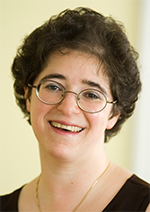
About SharingwithWriters Blog


Named to "Writer's Digest 101 Best Websites," this #SharingwithWriters blog is a way to connect with my readers and fellow writers, a way to give the teaching genes that populate my DNA free rein. Please join the conversation using the very tiny "comment" link. For those interested in editing and grammar, go to http://thefrugaleditor.blogspot.com.
Showing posts with label poetry contests. Show all posts

Saturday, March 28, 2020

Pushcart Prize Nominee Shares Winning Writers Resources with Sharing with Writers Blog

Jendi Reiter, Poet and Novelist, 

Shares Talents with Fellow Creative Writers


Interview by Carol Smallwood
Jendi Reiter, vice president of Winning Writersa “101 Best Websites for Writers” (Writer's Digest) pick , oversees the Winning Writers literary contests. The website, founded in 2001 to help poets and writers, is located in Western Massachusetts. Jendi is also an award-winning author with a new book of short stories, An Incomplete List of My Wishes (Sunshot Press/New Millennium Writings, 2018).
 Smallwood: How long did it take to organize the help so many poets and writers depend upon in Winning Writers? What was the spark that started it?
Reiter: WW is always evolving and refining our features, which include a monthly e-newsletter, four writing awards, and a database of the Best Free Literary Contests.
Nearly 20 years ago (!) my husband, Adam R. Cohen, and I were working in the publishing industry in NYC, but wanted to start our own business that we could take outside the big city and corporate life. He brought his marketing expertise as the Atlantic Monthly's former circulation director. I had been winning professional awards for my writing since high school, so I was familiar with many contests and could guide writers to find the best ones for their particular style and experience level. It took us half a year to get the business up and running. 
More than simply another directory, WW's mission was twofold: to educate emerging writers about contest scams, and to bring writers together to shed light on important social issues. The former objective was accomplished through the Wergle Flomp Humor Poetry Contest. The latter goal has informed all our contests, from the War Poetry Contest we launched after 9/11 to our current North Street Book Prize for self-published books.
Our two-person shop has grown to a staff of about 8 freelancers who help judge our contests, keep the database current, and do marketing research and diversity outreach. We find some of them through our local writing community, and others by approaching writers we admire and asking them to be guest judges. The benefit of an all-online business is that our talent pool isn't limited by geography. Our former next-door neighbor now screens the North Street Book Prize entries from her home computer in Poland, where she is researching her graduate thesis!
Smallwood: Please tell readers about “Hand-Picked Resources for Writers” that you edit:

Reiter: Adam and I read a lot of books and social media, which we're constantly harvesting for interesting links for our website. By curating these resources pages, we help writers find the best deals for self-publishing packages, book design services, stock photos, and other services for putting their work into the world.
Reading widely is essential to growing as a writer. We review our favorite books on the website, and also link to magazines and online archives of classic literature. In recent years we added a category called "Writing for Social Change", which spotlights journals, contests, and articles that promote minority voices or social justice issues.
Smallwood: the website requires a great deal of work to keep the literary contests current. How do you manage?
We are very grateful to our assistant editor Samantha Grace Dias for maintaining the database. So smooth, it's like it runs itself! Sam thoroughly understands the contest landscape and often alerts me to changes in contest guidelines that merit a ratings upgrade or downgrade. Hire her to edit your book or academic paper (samantha@winningwriters.com), but please don't steal her away from us!
  
Smallwood: When did your annual humor no-fee contest begin? Please share with readers how they may enter and also about the other contests Winning Writers sponsors:
Reiter: To enter any of our contests, go to the WW homepage, click on "Our Contests" at the top menu bar, and select the one you want. The submission period for each one is listed on the rules page for that contest. We prefer to receive entries through Submittable, but will consider mailed entries if you do not have Internet access.
The humor contest began in 2001 as a fun way to expose vanity contest scams: those "free" contests that accept nearly every entry and expect you to pay for a copy of the winners' anthology. We invited people to write the worst imaginable poem, submit it to a vanity contest, and then send it to us with their "acceptance" letter full of fake praise from the vanity sponsor. I believe we played a role in driving the largest scam contest, Poetry.com, out of business. Now our Wergle Flomp contest is just a free contest for the best humorous or parody poem.
The Tom Howard/John H. Reid Fiction & Essay Contest and the Tom Howard/Margaret Reid Poetry Contest are open-theme contests that we took over from our former affiliate, the Australian novelist John H. Reid. Mr. Reid passed away earlier this year and we are glad to continue these contests in his memory.
In 2015 we launched the North Street Book Prize for self-published books of fiction and memoir; in the 2018 contest (entries currently being judged) we added categories for poetry collections and children's picture books. Self-published and small press books face unwarranted prejudice from review outlets, bookstores, and awards committees. This prize allows us to signal-boost excellent books that are excluded from mainstream distribution channels.
 Smallwood: I first enjoyed reading your award-winning poetry chapbook, Swallow (Amsterdam Press, 2009) and have followed your progress. Please tell us about your most recent book that the Midwest Book Review noted has “Astute windows into society’s secrets, prejudices, double standards, and individual purpose.”
Reiter: My debut short story collection, An Incomplete List of My Wishes, was a runner-up for the Sunshot Prose Prize from the literary journal New Millennium Writings. These pieces, which I wrote over the past decade, won contests from journals such as the Iowa Review, Solstice Lit Mag, Passages North, and Bayou Magazine. Some of them began as character sketches for my novel Two Natures (Saddle Road Press, 2016), a coming-of-age story about a NYC fashion photographer during the 1990s AIDS crisis. The short story form allowed me to understand other perspectives apart from the novel's first-person narrator. 
Other stories grew out of my journeys through Jewish and Christian spirituality, weighing the comfort of collective belonging versus the danger for those who don't fit in—exiled because of our queerness or our refusal to be silent about abuses of power. Is love ever not conditional, and what price are we willing to pay for attachment?
Over this same period, I was trying to adopt a child, while becoming estranged from my family of origin. So there is a recurring theme in these stories of broken or never-formed bonds between parents and children, though sometimes life on the other side of that loss is better (or wiser) than what was left behind.
 Smallwood: your prize-winning books include poetry and fiction. Do you find it challenging to switch from one to the other?
Reiter: I always have several projects going simultaneously, because it's very easy for me to get bored or lose my confidence in whatever I focus on for too long. I don't necessarily recommend this as a strategy—it's just how my brain needs to be fed! My history as a poet makes me more attentive to the sound of every word in my prose. And I'm now discovering, upon my return to poetry, that my near-exclusive focus on fiction in the past four years has given me a better grounding in the details of our current cultural moment, and an increased interest in narrative and persona poetry to expand my poetic subject matter beyond my personal feelings.
Smallwood: do you have another book in mind? How much note taking, planning do you do before beginning your books?
Reiter: I am working intermittently on Origin Story, the sequel to Two Natures, as well as a chapbook of politically inspired poetry. Most of these poems aren't "ripped from the headlines" exactly, but are informed and energized by current themes (such as my gender transition, climate change, and the #MeToo movement), in a way that's different from my earlier, more philosophical and inward-looking poetry.

Disclaimer: The owner of this SharingwithWriters blog supports Winning Writers' North Street Book Prize as a way to help the general writing community know more about  how to avoid unethical contests and other scam and to help them judge contests and participate in them in positive ways. This interview, however, was acquired through serendipity and is offered solely on its value to SharingwithWriters visitors and subscribers.   
 MORE ABOUT JENDI REITER:

Read Jendi's books: 
  •  Bullies in Love (poetry)
  • Two Natures (novel)
  • An Incomplete List of My Wishes (stories)

MORE ABOUT THE INTERVIEWER
Carol Smallwood’s most recent poetry collection is In the Measuring (Shanti Arts, 2018). A recipient of the Albert Nelson Marquis Lifetime Achievement Award, she’s founded, supports humane societies.


MORE ABOUT THE BLOGGER

Carolyn Howard-Johnson is the multi award-wining author of fiction, creative nonfiction, and poetry. She is also a marketing consultant, editor, and author of the multi award-winning HowToDoItFrugally Series of books for writers including the multi award-winning The Frugal Book Promoter (http://bit.ly/FrugalBookPromoIII), now offered by Modern History Press in its third edition. Carolyn's latest is in the #HowToDoItFrugally Series of books for writers is How to Get Great Book Reviews Frugally and Ethically. Learn more on her Amazon profile page (http://bit.ly/CarolynsAmznProfile). Great Little Last Minute Editing Tips for Writers (http://bit.ly/Last-MinuteEditing) is one of her booklets--perfect for inexpensive gift giving--and, another booklet, The Great First Impression Book Proposal (http://bit.ly/BookProposalsII) helps writers who want to be traditionally published. The Frugal Editor (http://bit.ly/FrugalEditor), now in its second edition, is the winningest book in the series. Carolyn also has three frugal books for retailers including one she encourages authors to read because it will help them convince retailers to host their workshops, presentations, and signings. It is A Retailer’s Guide to Frugal In-Store Promotions: How To Increase Profits and Spit in the Eyes of Economic Downturns with Thrifty Events and Sales Techniques (http://bit.ly/RetailersGuide). In addition to this blog, Carolyn helps writers extend the exposure of their favorite reviews at TheNewBookReview.blogspot.com. She also blogs at all things editing--grammar, formatting and more--at The Frugal, Smart, and Tuned-In Editor (http://TheFrugalEditor.blogspot.com)

#WinningWriters #NorthStreetBookPrize #SharingwithWriters #TheFrugalBookPromoter #CarolynHowardJohnson

Wednesday, September 16, 2015

USA Book News Contest Soon to Close

This came to me too late for the September issue of my #SharingwithWriters newsletter.  I credit USA Book Awards with much of the readership across all of the genres I write in. Awards are great ways to promote books and I talk about that in my The Frugal Book Promoter, but this award is especially impressive at least in part because of its name. And we writers know how much is in a name!

FINAL ENTRY DEADLINE!

The 2015 USA Best Book Awards
12th Annual Awards Sponsored by USA Book News

Enter one of the largest literary awards geared toward the Indie press!

Join over 2000 of your fellow authors and publishers who have already entered this year’s competition.

-Entries must be postmarked on or before September 30, 2015

-Every book entered will receive a bonus 5-month, full color listing on USABookNews.com

-Open to all 2013-2015 Titles

-Entry fee is $69 per title/per category

Winners and finalists will be announced November 2015 just in time for the busy holiday retail season!

http://www.usabooknews.com/2015usabestbookawards.html  

"Book awards do count in marketing and in positioning as a recognized 'go-to' expert. USA Book News and the USA Best Book Awards are always on my recommended list for authors who create quality books to enter. I’ve found that the support from i310 Media Group for winners, both on its websites and with press releases, is exceptional and far beyond what most other awards do."
—Judith Briles, The Book Shepherd, CEO of AuthorU.org

"USA Best Book Awards has a ten year track record of honoring and promoting books to the national and international community. The contest is sponsored by USA Book News which covers books from all sections of the publishing industry—mainstream, independent, & self-published.”
—The San Francisco Book Review

http://www.usabooknews.com/2015usabestbookawards.html

For those who don't want to miss the regular lineup of "Accessible Contests" in my SharingwithWriters newsletter each month, subscribe at htttp://howtodoitfrugally.com. There is a signup form in the upper right corner of most pages.  Also, don't miss the "Writers Resources" section of that Web site which includes a page on contests.


----- Carolyn Howard-Johnson, author of This Is the Place; Harkening: A Collection of Stories Remembered; Tracings, a chapbook of poetry; and how to books for writers including the award-winning second edition of, The Frugal Book Promoter: How to get nearly free publicity on your own or by partnering with your publisher; The multi award-winning second edition of The Frugal Editor; and Great Little Last Minute Editing Tips for Writers . The Great First Impression Book Proposal is her newest booklet for writers. She has three FRUGAL books for retailers including A Retailer’s Guide to Frugal In-Store Promotions: How To Increase Profits and Spit in the Eyes of Economic Downturns with Thrifty Events and Sales Techniques. Some of her other blogs are TheNewBookReview.blogspot.com, a blog where authors can recycle their favorite reviews. She also blogs at all things editing, grammar, formatting and more at The Frugal, Smart and Tuned-In Editor .

Sunday, March 08, 2015

So What Is NOT Funny About Humor Poetry

I have been following the guidelines for contests at http://WinningWriters.com for a long time and they have never lead me wrong.  You'll love their newsletter. You'll also love the advice they give on better ways to compete in literary contests, like this for their coming Wergle Flomp poetry Contest. Find advice on what NOT to submit to their FREE humor poetry contest below--and links to enter!  And you'll also find more information, ideas, and contests in the Writers Resources section of my Web site at  http://howtodoitfrugally.com/contests.htm.

Enter Our Wergle Flomp Humor Poetry Contest

Our 14th annual Wergle Flomp Humor Poetry Contest welcomes your entry through April 1.
There's no fee to enter. Jendi Reiter will judge, assisted by Lauren Singer. We'll
award $2,000 in prizes, including a top prize of $1,000. Winners are published on our website.
This contest welcomes published and unpublished work. Your poem may be of any
 length. Click to submit online.
After screening last year's 4,484 entries, Lauren has advice for this year's
contestants:
Parodies based on Poe, "The Night Before Christmas", Yeats, ans Frost:  
If you are going to have a "With Apologies To..." poem, it needs to be clever enough to back up the fact that it is based on a famous original. So many of these poets jumped ship somewhere in the middle and did not utilize any clever parodying qualities, and merely wrote poems that were completely separate from the originals. Just stealing the voice of a dead poet does not a good poem make!
Poems that I found particularly arduous to read: Poems about pooping, farting, vomiting, getting fat, having saggy boobs, tricking your husband so that he would stay with you, tricking your wife so that she would leave you, wrinkles, chocolate addiction, unoriginal limericks that began "There once was a man from Nantucket" that ended with "f*** it!", poems that invented their own language without a glossary and just translated as wan gibberish.
Poems that were offensive: Ones that embraced a pro-rape culture (there were more of these than you might think, and it was quite disheartening); poems that described women as objects; poems that led the reader to believe they were about women and then turned into poems about an object (odes to a car, boat, La-Z-Boy, golf club, burger, guitar, etc.); homophobic, sexist, xenophobic, racist poems, of which there were many; poems that mock a lifestyle in attempts to undermine it (making light of stay-at-home moms/dads, that sort of thing); poems that made light of mental illness, addiction, and recovery, in an offensive way as opposed to a self-deprecatingly humorous way.
"I'm getting so old" poems: These were by far the highest number of poems submitted in 2014. These have the ability to be funny, but more often than not there is SO much overlap. "I used to be so attractive, thin, energetic. Now I'm fat, wrinkly, and don't have sex. I can't bend over anymore, I can't sit up without grunting, I can't eat fried foods, I can't enjoy life because I'm over 60." These become tiring and disheartening after a while. There were a few that embraced an original voice and those made the cut, but the vast majority of poems about aging were nearly indistinguishable from each other.
Feeling squirrelly: There were well over a hundred poems solely about squirrels. This is merely a side note, as some of them were quite funny, but out of sheer curiosity, what the hell was it about squirrels this year? What is this obsession? Why are squirrels so dang poetic? Any squirrel poems that ended in a pun about nuts generally didn't make the cut.
All the Wergle Flomp winning poems and judges' comments going back to 2002 are
http://winningwriters.cmail1.com/t/d-l-ykidikl-trutbad-x/
 available for reading in our website archives.
Submit your 2015 entry now at
http://www.winningwriters.com/wergle


http://winningwriters.cmail1.com/t/d-l-ykidikl-trutbad-u/


http://winningwriters.cmail1.com/t/d-fb-ykidikl-trutbad-d/ http://winningwriters.cmail1.com/t/d-tw-ykidikl-trutbad-h/


-----
Carolyn Howard-Johnson, author of This Is the Place; Harkening: A Collection of Stories Remembered; Tracings, a chapbook of poetry; and how to books for writers including the award-winning second edition of, The Frugal Book Promoter: How to get nearly free publicity on your own or by partnering with your publisher; The Frugal Editor: Put Your Best Book Forward to Avoid Humiliation and Ensure Success; and Great Little Last Minute Editing Tips for Writers . The Great First Impression Book Proposal is her newest booklet for writers. She has three FRUGAL books for retailers including A Retailer’s Guide to Frugal In-Store Promotions: How To Increase Profits and Spit in the Eyes of Economic Downturns with Thrifty Events and Sales Techniques. Some of her other blogs are TheNewBookReview.blogspot.com, a blog where authors can recycle their favorite reviews. She also blogs at all things editing, grammar, formatting and more at The Frugal, Smart and Tuned-In Editor .

Monday, March 22, 2010

The Beauty of Poetry Prizes and Free Submissions


Never again will I quote the person who said something like “Poets are lucky to make 4 cents an hour.”

That’s because one of my poems just won a wonderful cash prize from Franklin-Christoph, maker of fine writing instruments. Sponsoring a poetry contest is an ideal connection for such a company and they do it every year. It seems writers—including poets—and beautiful pens and scripts just go together. The poem is “Endangered Species.” It is about a sea dragon who is endangered, but in more ways than one. Find it at http://budurl.com/FreePoetryContest While you're there, poke around and find the free submission process for your own poem.

The pay was excellent if one considers the hours it took to write that one poem. It is best not to factor in the study time and cost required to develop the craft of poetry. In fact, it is best not to think of poetry and most other arts in terms of income, of fame for that matter.

We all know why we write. We write for the love of it. Those who take it up for any other reason, tire of it and eventually disappear from the writing scene. Gone to better things? I think not. Just to something—whatever that may be—that suits them better. I only hope that whatever that is brings them as much joy as writing brings to me.

I'm including some widgets for some other poetry I've done, the Celebration Series of chapbooks with Magdalena Ball. We're excited about the gift-giving concept for poetry, something in about the same price range as a very nice greeting card and less than a box of fatening chocolates. (-:

-----
Carolyn Howard-Johnson, author of This Is the Place; Harkening: A Collection of Stories Remembered; Tracings, a chapbook of poetry; and two how to books for writers, The Frugal Book Promoter: How To Do What Your Publisher Won't and The Frugal Editor: Put Your Best Book Forward to Avoid Humiliation and Ensure Success. Her FRUGAL book for retailers is A Retailer’s Guide to Frugal In-Store Promotions: How To Increase Profits and Spit in the Eyes of Economic Downturns with Thrifty Events and Sales Techniques. She is also the author of the Amazon Short, "The Great First Impression Book Proposal". Some of her other blogs are TheNewBookReview.blogspot.com, a blog where authors can recycle their favorite reviews. She also blogs at all things editing, grammar, formatting and more at The Frugal, Smart and Tuned-In Editor .

If your followers at Twitter would benefit from this blog post, please use the little Green widget to let them know about it:

Wednesday, December 09, 2009

On LIterary Snobbery, Contests and Our Readers


I want to talk about contest snobbery and antisnobbery snobbery.

The subject is on my mind because two of my books were named USA Book News finalists this fall. A Retailer's Guide to In-Store Promotions and my poetry chapbook on motherhood. Those events caused quite a nice conversation about awards between me and a couple of my Sharing with Writers newsletter subscribers.

In fact, I often talk to people on both sides of the contest snobbery issue and to some who were still trying to make up their mind which side of the fence they should sit on.

There is a lot of this uncertainty going around in the literary world. I often hear people disdain this contest or that printing press or even that book because it doesn't fit with their literary standards. I might—-on the very same day-—hear authors pooh-poohing poetry or literary works as being elitist or no fun or hard to read or dull.

Here's my stance on both kinds of snobbery. They are both forms of bigotry. That is they are labeling something as less than and making wide generalizations. One could write a book on the reasons people do this. To inflate their own worth, deflate the worth of others, because they are fearful of not fitting with one group or another or being criticized by one of those groups, to protect what they see as their favored position.

You can probably think of other reasons. But today, let's address contest bigotry because that's where this discussion started.

In the past few years as books have procreated like little piglets, we must have some way to help ours stand out for the general reader. Reread the section on contests in your Frugal Book Promoter for a longer discusion if need be. But here's where I stand:

If one must choose between letting readers know you have a quality product (and our books are products even if we don't want to think of them that way) and caving to those who think nothing counts but the Pulitzer and Booker, I'll choose my reader every time.

Do know that people have been paying to enter contests for eons. In fact, many of the finest review journals are nearly fully financed by donations, grants and, yes, contest monies and that isn't new either.

Having said that, there is no reason to waste money entering any contest if you haven't studied the guidelines and aren't confident that you have a quality book and have checked with peers to be sure that the contest you are interested in is on the up and up. But do be careful. Just because a contest does not meet the literary needs of your specific title or the branding concept you have outlined for yourself does not make it a scam or, for that matter, generally undesirable.

Once you have determined yourself a match for a contest, go for it. Once you win place, or show, do all you can to let the world know about it; send out media releases, let your relatives know, and give everyone the link for buying your book! On Creatspace or Amazon or Barnes and Noble online and try to give them a lead to a local or convenient bookstore, too. When I'm talking to my students, I always send them to the university bookstore.

I think Maggie Ball and I have written a chapbook of poetry that will be a perfect stocking stuffer to send Mom and a perfect greeting-card envelope-sized gift to send to other mothers in your life including those of the boomer and/or sandwich generations. Especially those. (-: And that my retail book will benefit those with brick and mortar or online stores. And I'm happy to shout out that they placed this year.

Winners are people who think they are winners. I feel sorry for the Oscar nominees who take on a loser mentality when they don't take home a statue. Or the girl who is voted to the Homecoming Court but is jealous of the winner. In fact, sometimes I wonder about their capacity for a little something called gratitude.

PS: On my Web site there is a short list of accessible contests in the Resources for Writers section (the link for that section is on the top of every page). The list is not long because it includes only contests that I have had personal experience with or know the contest administrators.


Technorati Tags:
, , , , , , , , , , , ,


-----
Carolyn Howard-Johnson, author of This Is the Place; Harkening: A Collection of Stories Remembered; Tracings, a chapbook of poetry; and two how to books for writers, The Frugal Book Promoter: How To Do What Your Publisher Won't and The Frugal Editor: Put Your Best Book Forward to Avoid Humiliation and Ensure Success. Her FRUGAL book for retailers is A Retailer’s Guide to Frugal In-Store Promotions: How To Increase Profits and Spit in the Eyes of Economic Downturns with Thrifty Events and Sales Techniques. She is also the author of the Amazon Short, "The Great First Impression Book Proposal". Some of her other blogs are TheNewBookReview.blogspot.com, a blog where authors can recycle their favorite reviews. She also blogs at all things editing, grammar, formatting and more at The Frugal, Smart and Tuned-In Editor blog.

Saturday, August 01, 2009

Poet Harry E. Gilleland Jr. Explains Storoem

In poetry circles Harry Gilleland is best know for pioneering the storoem form and naming it. He once contributed to my Sharing with Writers newsletter and I thought the poets among you might be interested in his work and take note of how he manages to promote his poetry by contributing to the poetry community and poetry in general. Naturally, I had to ask him to be a guest blogger for my Sharing with Writers blog.


My love for poetry sprang from my reading the poetry of Poe, Tennyson,and Frost, all of which are noted for rhyming poetry. Therefore, when I started writing poetry, I wrote rhyming verse, not getting into writing free-verse until later. (One valuable website for writing
rhyming poetry that I discovered early-on is RhymeZone, where you can get suggestions for rhyming words to complete your endrhymes.)

Some poetry critics strongly believe all poetry should be short and concise, usually concentrating on one specific item. I have never thought this. Sometimes I like for my poems to tell a complete story. From when I initially started writing poetry, I would tell a more complete story, but in doing so I used various poetic techniques, such as stanzas (usually quatrains), end-rhymed lines, enjambment,alliteration, imagery, extended metaphor, etc. not usually found in prose.

My lines tended to be longer than most poems typically have,and I did not usually employ a set syllable count. The end result was that my poems resembled prose or narrative poems, I used more poetic techniques than one finds in a typical prose poem and they were longer, less purely poetic lines than a typical narrative poem.

Readers would ask me what I call my poetry. I started out calling my style a
story-poem, and eventually I coined a new term “storoem” (stor- plus
-oem).

Some readers immediately liked my storoem format, while others initially resisted it. Today most readers accept the format with little difficulty.

In fact, one of my early storoems, from “The Old Salty Poems," recently won second place (and a $1,000 prize) in the 2008 Tom Howard Poetry Contest http://www.winningwriters.com/contests/tompoetry/2008/tp08_gilleland.php, a prestigious international contest. Contest judge John H. Reid said, "Harry Gilleland's 'The Old Salty Poems' belongs to a tradition that has almost died out—the character/narrative poem.

Although easily the most popular genre of poetry in the 19th century, character/narrative poems were supplanted by Eliot, Spender, Pound and a whole host of their 20th century disciples. It has often been suggested that poetry would still be as popular and best-selling with the masses today, if mainstream verse had continued in the character/narrative vein.

"Certainly such a delightful, vastly entertaining throwback as 'The Old Salty Poems' lends a great deal of credence to this idea. I picture copies for sale at my local Borders and see crowds of customers picking up the book and marveling at the free-flowing skill and expertise with which Gilleland has brought such a charming tale to
vibrant, poetic life." (see
http://www.winningwriters.com/contests/tompoetry/2008/tp08_pastwinners.php)

Since my storoems tend to have more lines and longer lines than many poems do, I found that the use of enjambment aids the flow or the smooth reading of the storoem. (For an explanation of enjambment and its effect, see http://www.poeticbyway.com/gl-e.html .) I never have understood why some readers believe every line should be end-stopped. Once a new reader of my storoems reads a few examples, he/she usually
grows to enjoy the storoem form.

To summarize the storoem form:

1) Tells a more complete story than the typical poem.

2) Has stanzas, usually quatrains, throughout.

3) Lines are end-rhymed, making a storoem a rhymed poem. Rhyming
pattern may vary but typically is abab.

4) Line lengths and word count or syllable count are variable, with no
set pattern or rhythm. Lines tend to be longer than in a typical
narrative poem.

5) Various poetic techniques are employed, including but not limited
to alliteration, assonance, enjambment, repetition, imagery, metaphor,
rhyme, etc so that lines are more poetic than found in a typical prose
poem.


PS: Please come back on August 3rd when I'll post a couple of Harry's stoerem as examples...with his permission, of course!-----
Harry Gilleland is a well-known, award-winning poet who has published three
books of poetry
to date. They are “Poetic Musings of an Old, Fat Man," a Reader Views Literary Award winner (Honorable Mention in Fiction, Poetry category.) He blogs at http://harrygillelandwrites.blogspot.com/.

-----
Carolyn Howard-Johnson, author of This Is the Place; Harkening: A Collection of Stories Remembered; Tracings, a chapbook of poetry; and two how to books for writers, The Frugal Book Promoter: How To Do What Your Publisher Won't and The Frugal Editor: Put Your Best Book Forward to Avoid Humiliation and Ensure Success. Her FRUGAL book for retailers is A Retailer’s Guide to Frugal In-Store Promotions: How To Increase Profits and Spit in the Eyes of Economic Downturns with Thrifty Events and Sales Techniques. She is also the author of the Amazon Short, "The Great First Impression Book Proposal". Some of her other blogs are TheNewBookReview.blogspot.com, a blog where authors can recycle their favorite reviews. She also blogs at all things editing, grammar, formatting and more at The Frugal, Smart and Tuned-In Editor blog.